
A young Chinese cross-border e-commerce entrepreneur born in the mid-1990s, who works in Shenzhen, recently travelled to Saudi Arabia for a mix of business and leisure during the off-season. Instead, he found himself stranded in his hotel in Riyadh, at a loss over what to do next.
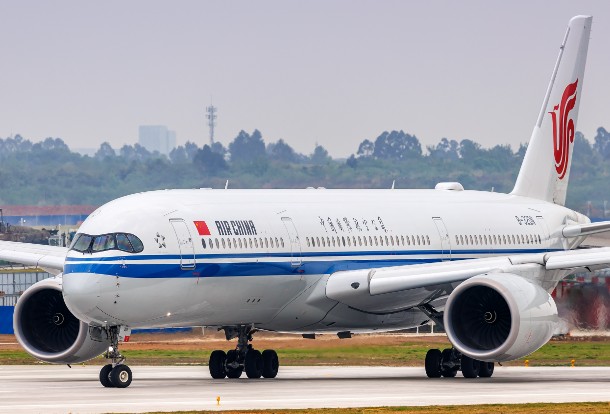
Following air defence alerts in mid-October, Riyadh’s King Khalid International Airport suddenly closed. He was told that his flight would still depart as scheduled, but from Jeddah instead.
Riyadh lies in central Saudi Arabia, while Jeddah sits on the Red Sea coast to the west. The two cities are separated by roughly 950 kilometers of desert.
Among those stranded in the station concourse with him were several fair-haired, blue-eyed European business travelers. Phones in hand, they tried to communicate with staff at the counter through gestures. In the end, they had little choice but to share a car with a local driver and set off overnight across the Arabian Desert to catch their flight.
As air travel across the Middle East ground to a halt, European streets were creating a different kind of headache for tourists.
On 24 October, a fresh wave of cost-of-living protests swept across France, with around 410,000 people reportedly taking part in demonstrations over living costs and education funding. In parts of Paris, shopkeepers boarded up their windows ahead of the weekend, bracing for potential vandalism and looting in areas popular with visitors.
The Louvre, Musée d’Orsay and Paris Opera House also closed that day. More than 20 metro stations were shut, while several stations near the Champs-Élysées were closed at police request. Curfews remained in force in several parts of France.
Amid the unrest, some Chinese tourists who had just arrived in Paris stepped out of metro stations dragging their suitcases, only to find themselves walking straight into clouds of tear gas.
Neighbouring Italy was hardly any calmer.
According to Reuters, street unrest involving around 2,000 black-clad youths broke out in Milan on 17 and 18 October. Of the 271 people detained by police, more than 80% were minors.
Young travelers who rely on Xiaohongshu for photo spots and check-in tips, rarely follow international news and simply book a flight whenever the mood strikes, found themselves caught in a real-life travel nightmare in the autumn of 2026.
Much of our instinctive faith in spontaneous travel comes from having been too sheltered at home in China.
People in China have long been accustomed to the sense of security that allows them to enjoy street food at 2 a.m., as well as the near-clockwork punctuality of the country’s high-speed rail network.
Even when typhoons or snowstorms disrupt domestic transport, airlines and railway operators typically step in to offer refunds and rebooking options. Over time, it becomes easy to mistake China’s highly stable public order and transport infrastructure for the global norm.
Social media algorithms also reinforce this false sense of security.
But a succession of unexpected disruptions overseas is sending a clear message to travelers: in the years ahead, setting off on a whim without adequate preparation could become a high-risk game of chance.