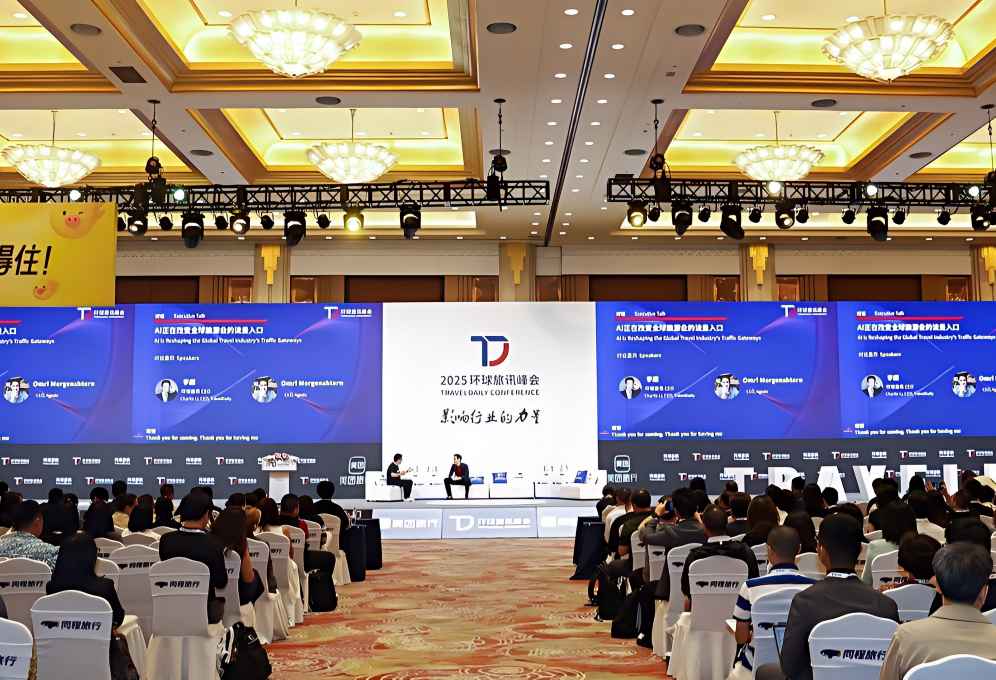
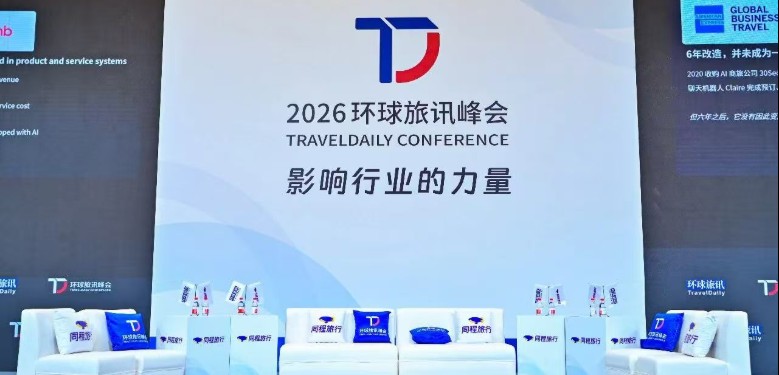
More than 1,900 travel industry professionals gathered in Shanghai on September 22-23 for the 2026 TravelDaily Conference, bringing together leaders from OTAs, hotels, airlines, cruise lines, TMCs, destinations, travel technology companies, cultural tourism businesses and investment institutions. Key decision-makers from travel companies accounted for 85.1% of attendees.
Held at the Shanghai International Convention Center under the theme “Change,” the two-day event explored how the travel industry is navigating a market where the old formulas of traffic acquisition, rapid expansion and scale-driven growth are no longer enough.
Senior executives from across the global travel industry joined the event, including:
* Jane Sun, CEO of Trip.com Group
* Drew Pinto, Executive Vice President and Chief Revenue & Technology Officer of Marriott International
* Kent Zhu, CEO of Accor Greater China
* David Sun, General Manager of BTG Hotels Group and Chairman & CEO of Homeinns Hotel Group
* Nong Xia, President of Development for Greater China & Mongolia at Hilton
* Fabien Blondet, Senior Vice President, R&D at Amadeus
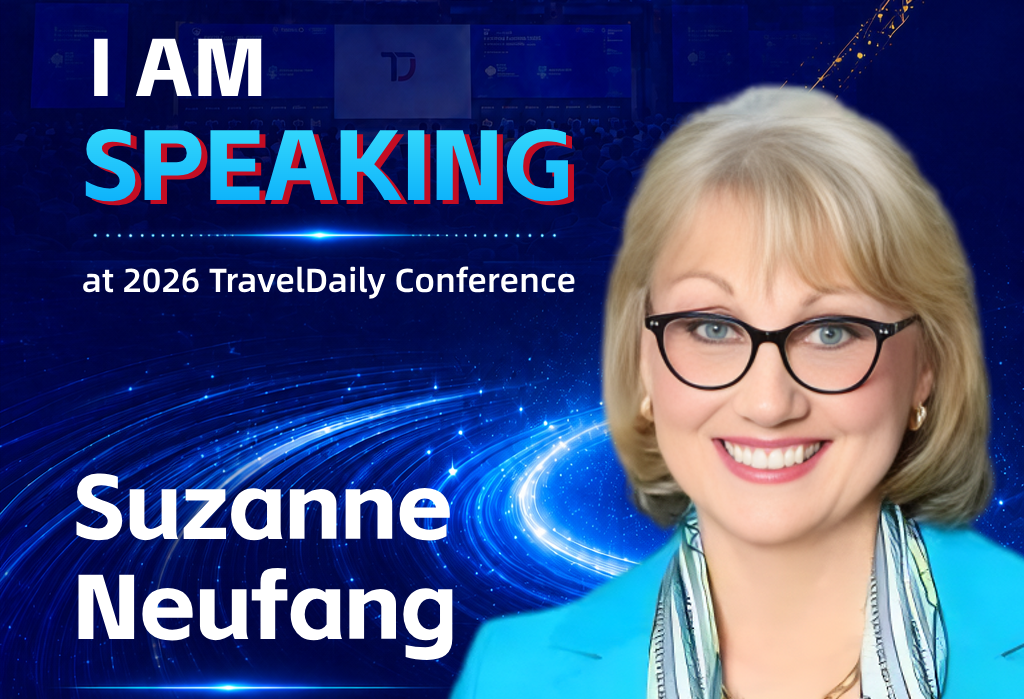
* Suzanne Neufang, CEO of GBTA
Across three major forums — the main TravelDaily Conference,Hotel Marketing Conference and Business Travel Conference — discussions spanned tourism consumption, hospitality, corporate travel, distribution and AI. Despite the breadth of topics, several common threads emerged.
From traffic to value
Inbound tourism offered one example.
In a conversation titled “From Viral Buzz to Lasting Value: Turning Inbound Tourism Interest into Tangible Growth,” Trip.com Group CEO Jane Sun and TravelDaily CEO Charlie Li discussed how growing international interest in China could translate into incremental demand.
As inbound travel continues to gain momentum, the industry is moving beyond visitor numbers. The bigger question lies in encouraging longer stays and higher spending, while enabling hotels, attractions, transportation, retail and other parts of the tourism ecosystem to capture more of the value generated by international demand.
That leads naturally to another question: what needs to be built beyond traffic?
Tongcheng Travel CMO Zhiwei Bai explored how stronger digital infrastructure and destination service capabilities can help turn short-term attention into sustainable tourism consumption.
Together, the two discussions reflected a broader shift in the market. Attracting travelers is only the beginning. Destinations and travel companies increasingly need the products, infrastructure and services to retain them, serve them and ultimately convert demand into value.
AI moves closer to the core of the business
AI provided another major thread running through the conference.
The conversation has moved quickly beyond what generative AI can do. The more pressing question now is whether it can produce measurable business outcomes.
Amadeus Senior Vice President, R&D, Fabien Blondet examined how trusted data, ecosystem integration and deployment at scale are becoming critical to applying AI across travel.
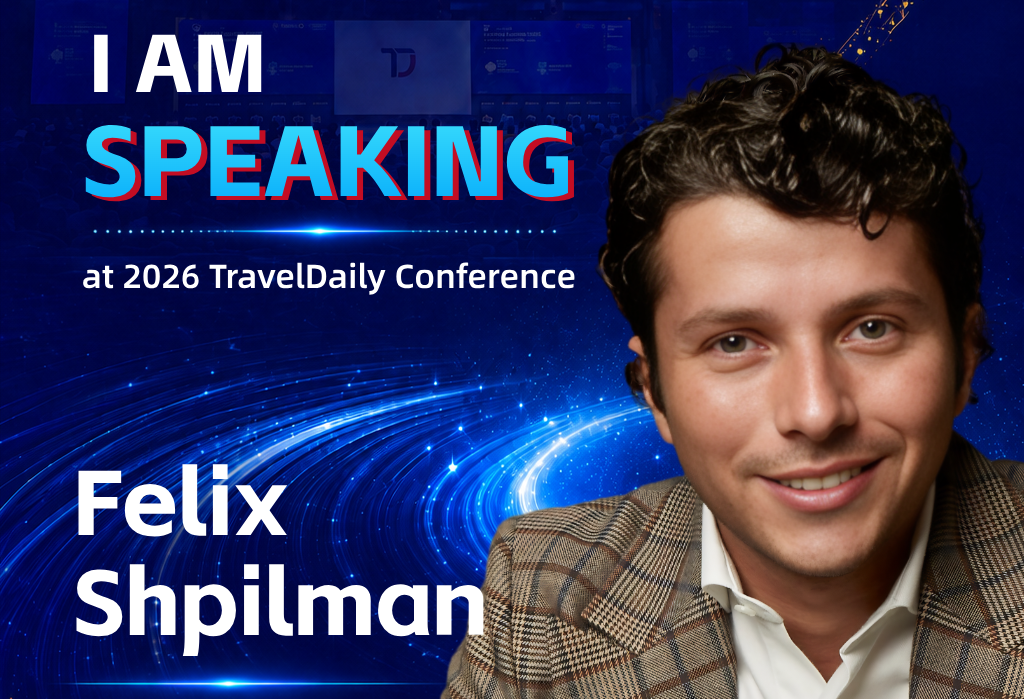
The conversation moved further into the operating layer with Emerging Travel Group (ETG) CEO Felix Shpilman, who joined VariFlight Global Managing Director Joseph Xia to examine how AI could reshape travel distribution, from inventory aggregation, demand-supply matching to customer service and operational efficiency.
Plug and Play Managing Partner Amir Amidi pushed the question further: how does AI move from pilot projects to profitability?
Taken together, these highlighted sessions show how the role of AI in travel is changing.
AI is no longer simply a front-end tool for search, recommendations, customer service or content generation. It is increasingly becoming part of the operating infrastructure of travel businesses, connecting demand, supply, distribution and execution.
The next stage of competition may therefore be less about who has the most advanced AI model and more about who can embed AI into real workflows and turn that capability into measurable results.
Hotels move beyond the scale game
The hotel sector revealed a parallel transformation.
As China’s hotel market matures, the conversation is shifting from expansion speed and room count toward property-level efficiency, differentiated products, owner returns and deeper customer relationships.
Senior executives from Hilton, IHG and Shangri-La discussed how international hotel groups are localizing products for Gen Z and emerging cultural-tourism demand. Accor Greater China CEO Kent Zhu examined what comes next for international hotel groups in China as competition moves “beyond scale, beyond luxury.”
Chinese hotel groups were asking similar questions from another direction: after years of rapid expansion, what capabilities will define the next stage of growth?
Technology is accelerating that transition. Fliggy CTO Dr. Alex Chen explored how agentic commerce and AI-native travel could reshape travel discovery, recommendations and transactions, while Delonix Group CTO LingHang Meng examined how hotel AI can connect guest requests with actual service execution.
The same search for new operating models extends beyond China. NUMA Group Founder & CEO Christian Gaiser examined digital opportunities arising from structural changes in Europe’s hotel market, while GBTA CEO Suzanne Neufang brought a global and Asia-Pacific perspective on the economic and technological forces shaping corporate travel.
A global industry looking for its next growth model
The breadth of companies represented in Shanghai reflected how widely these questions are being felt.
Global players including Marriott International, Accor, Hilton, IHG, Shangri-La, Amadeus, GBTA, Mastercard, American Express Global Business Travel, BCD Travel, MSC Cruises, Warner Bros. Discovery, Emerging Travel Group and Plug and Play joined major Chinese travel and hospitality companies including Trip.com Group, Tongcheng Travel, Fliggy, Meituan, BTG Homeinns, H World Group, Jin Jiang International, Atour Group and Dossen International Group.
They represented different parts of the travel ecosystem, but the challenges discussed over the two days increasingly converged.
Traffic still matters, but traffic alone is no longer enough. Scale remains important, but creating value after achieving scale is becoming more critical. AI is moving into the core of the travel business, but technology itself is not the destination.
From inbound tourism and hospitality to distribution and corporate travel, the industry is moving toward a growth model built increasingly around value, efficiency and execution.
For travel companies, the challenge now is to turn technology, supply and evolving consumer demand into sustainable business value.
That, ultimately, was what “Change” meant at the 2026 TravelDaily Conference.