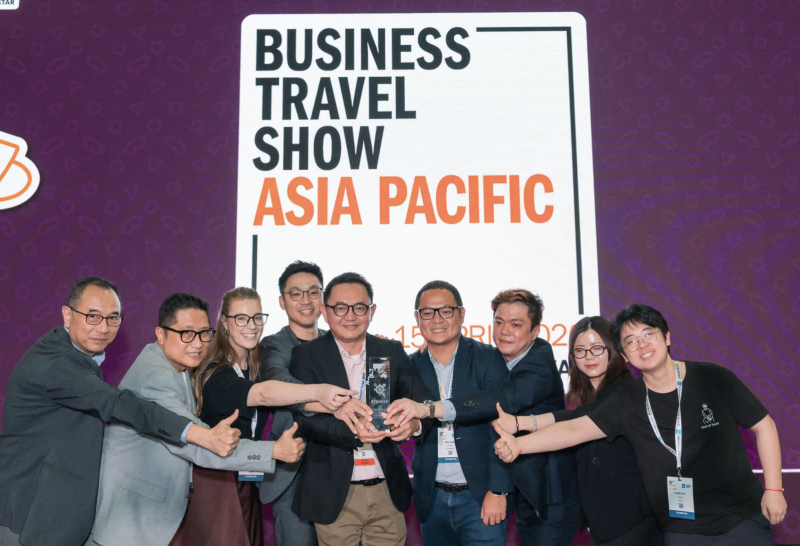
At TravelDaily's 2026 Digital Intelligence Conference · Shanghai Edition on April 2, Changhua He, China Outbound Operation Lead at Airbnb, delivered a keynote speech titled “Redefining China‘s business travel: unlocking the diverse possibilities of new outbound business travel.” He later joined Charlie Li, CEO of TravelDaily, for a fireside chat on “How alternative accommodations empower Chinese enterprises going global.”
During his session, He shared a key insight: The evolution of China’s outbound business travel market fundamentally mirrors the deepening globalization of Chinese enterprises. As business trips increasingly blend into everyday lifestyles, the time has come to rethink and redesign the business travel experience.
“We’ve observed that bookings from China’s outbound ‘new business travel’ segment on Airbnb are growing faster than the overall market, making it a key driver of industry growth,” He noted.
According to research from the TravelDaily Research Institute, more than half of outbound business trips now last over six days, and business travelers expect their travel frequency to increase further over the next year. This shift toward longer stays and higher frequency is reshaping the global footprint of Chinese companies.
Against the backdrop of this “new business travel,” Chinese travelers are spreading across a wider range of destinations. On Airbnb, cities such as Ho Chi Minh City, Jakarta, Bali, and Penang ranked among the top 10 fastest-growing destinations for “new business travel” bookings in 2025.
Business travel is now flowing alongside industries, opportunities, and lifestyles—giving rise to more diverse and nuanced scenarios.
He identified long-term assignments as the most typical scenario, followed by short-term trade fairs and exhibitions.
In addition, as remote work technologies mature and cross-border mobility increases—driven by the pursuit of better education and healthcare—new patterns of living and working are emerging. This has led to a rise in mid- to long-term outbound demand, giving birth to new scenarios such as digital nomads, study-abroad companionship, and family wellness travel.
How do alternative accommodations address the “hidden pain points” of business travel?
He offered further insights from the supply side. Staying in an Airbnb property not only provides a stronger sense of everyday living, but in many cases also addresses a fundamental issue of “zero-to-one” availability.
For example, many exhibition and convention venues are located outside core business districts, where standardized hotel supply is often limited. Alternative stays can effectively fill these gaps, directly impacting the feasibility and efficiency of business activities.
At the same time, a full-unit stay allows teams to enjoy both private spaces and ample shared areas for collaboration. In high-intensity business travel scenarios, this setup can significantly enhance productivity.
Details like doing laundry or cooking also resonated strongly during the discussion—highlighting how small aspects of daily life can make a meaningful difference in the overall business travel experience.