
In the heart of Central Europe, in Prague, a company founded in 2015 set out to reshape what appears to be one of the most traditional sectors in travel: ground transportation.
A decade later, that company now operates in more than 130 countries, has built a network of over 10,000 drivers, raised approximately 17.6 Euros million in funding, and reached profitability in 2025.
Its name is Daytrip.
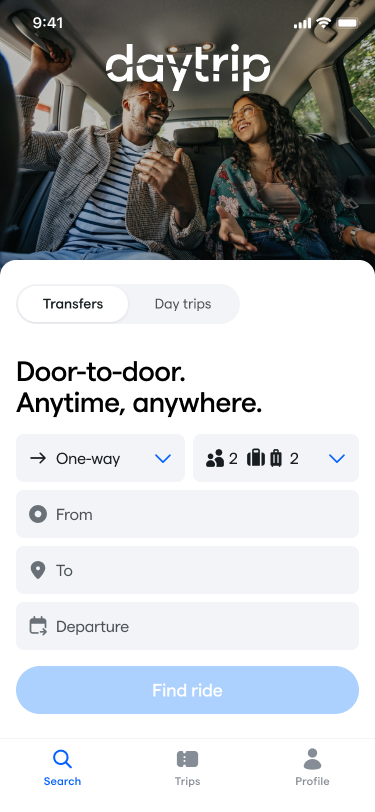
The question is: in a world where ride-hailing services like Uber have become second nature and local transportation providers are deeply entrenched in every market, how did a platform focused on long-distance pre-booked transfers grow to this scale?
Is it a car service company—or a travel service company?
The answer, perhaps, lies somewhere in between.
Not drivers, but “local friends”
Before founding Daytrip, the company’s founders ran a cross-border shuttle bus service between the Czech Republic and Austria. It was a classic price-sensitive business: low cost, high frequency, and heavily dependent on seat utilization.
But the team soon noticed another group of travelers—independent tourists.
Imagine this situation.
You’re dragging your suitcase through Prague’s Old Town Square after watching the sunset with your parents or children. The next day, you plan to travel to Vienna.
You check the trains: two transfers required.
Flying might be faster, but once you factor in airport transfers and waiting times, it takes half a day anyway.
Renting a car? Driving for hours on unfamiliar highways in a foreign country, figuring out traffic rules, and worrying about returning the car—it quickly becomes exhausting.
So most travelers eventually consider hiring a private car.
But then new concerns arise: Is the company reliable?
Will the driver demand extra money halfway through the trip?
What if communication becomes difficult?
This is a problem many travelers face—and one that Daytrip aimed to solve from the very beginning.
During an interview, Charlie Li, CEO of China’s travel industry media TravelDaily, asked Daytrip founder Tomáš Turek a direct question:
“Are you a transportation company or a travel company?”
Turek smiled. “Both—and neither.”
For Chinese travelers, Daytrip’s core service isn’t unfamiliar: it’s essentially private car transfers. But their approach is slightly different.
For example, if you want to travel from Paris to Mont-Saint-Michel, public transportation could take most of the day. But with Daytrip, you might stop along the way in a small cheese-making town known mostly to locals, or visit a medieval castle hidden deep in the forest.
These are not places easily found in travel guides. They’re often recommendations from local drivers.
What makes Daytrip distinctive is how they define those drivers.
They’re not just drivers—they’re “local friends.”
Turek explains that drivers don’t need to memorize scripted tour commentary like professional guides. But they must be locals who speak fluent English and enjoy interacting with travelers.
“They’ll tell you where people here like to spend their weekends, how a certain dish should be eaten, or the ghost legend behind that castle up ahead.”
10,000+ drivers worldwide—how do they maintain quality?
At this point, a natural question arises: with over 10,000+ drivers across more than 130+ countries, how does Daytrip ensure service quality?
After all, many travelers have encountered unreliable drivers when traveling abroad.
This challenge has become one of Daytrip’s core operational focuses—and something the company has spent ten years refining.
Turek shared an example.
Many private transfer platforms simplify operations by partnering with large local fleets that operate hundreds of vehicles. In the case of Daytrip, they favor working with small operators with three to five vehicles, or even independent drivers. It is more of a preference driven by logistics and the need to maintain global standards.
“If you partner with a company that has hundreds of cars, you have no control over who actually shows up for the ride,” Turek says.
In Daytrip’s system, even if a driver belongs to a small fleet, they must log into the platform using their personal ID. Trips are tracked via GPS, and every driver maintains an individual profile with detailed performance records and passenger feedback.
“For example, a supplier might recommend 20 drivers, but we may approve only 15. If someone consistently receives negative reviews, we remove them from the system. We evaluate each person individually—not just the supplier.”
This level of granular, people-focused management may seem inefficient, but in service industries it often proves effective.
Daytrip is now strengthening this approach with technology.
The company uses AI to verify driver licenses and regulatory compliance across different countries, monitors driving behavior via GPS, and plans to analyze driving styles through data in the future.
By combining human screening and interviews with data-driven monitoring, Daytrip aims to ensure both warmth in service and precision in safety.
Understanding the needs of family travelers
Before launching Daytrip, the founders operated a budget shuttle bus service between the Czech Republic and Austria—something similar to airport shuttle buses in Europe, mainly serving backpackers with limited budgets.
“But we noticed a small group of customers,” Turek recalls. “They were willing to pay more and asked whether our driver could stop at a small village along the way.”
These travelers were often families with children, or adults traveling with their parents.
It makes sense.
When you travel alone as a backpacker, you can tolerate long bus rides or budget hostels.
But when you’re traveling with children—managing strollers, luggage, and child seats—or accompanying elderly parents struggling up train station stairs, comfort and convenience suddenly become much more valuable.

Daytrip recognized this demand early.
They discovered that this kind of personalized transportation often goes beyond simple mobility. It becomes a broader travel service.
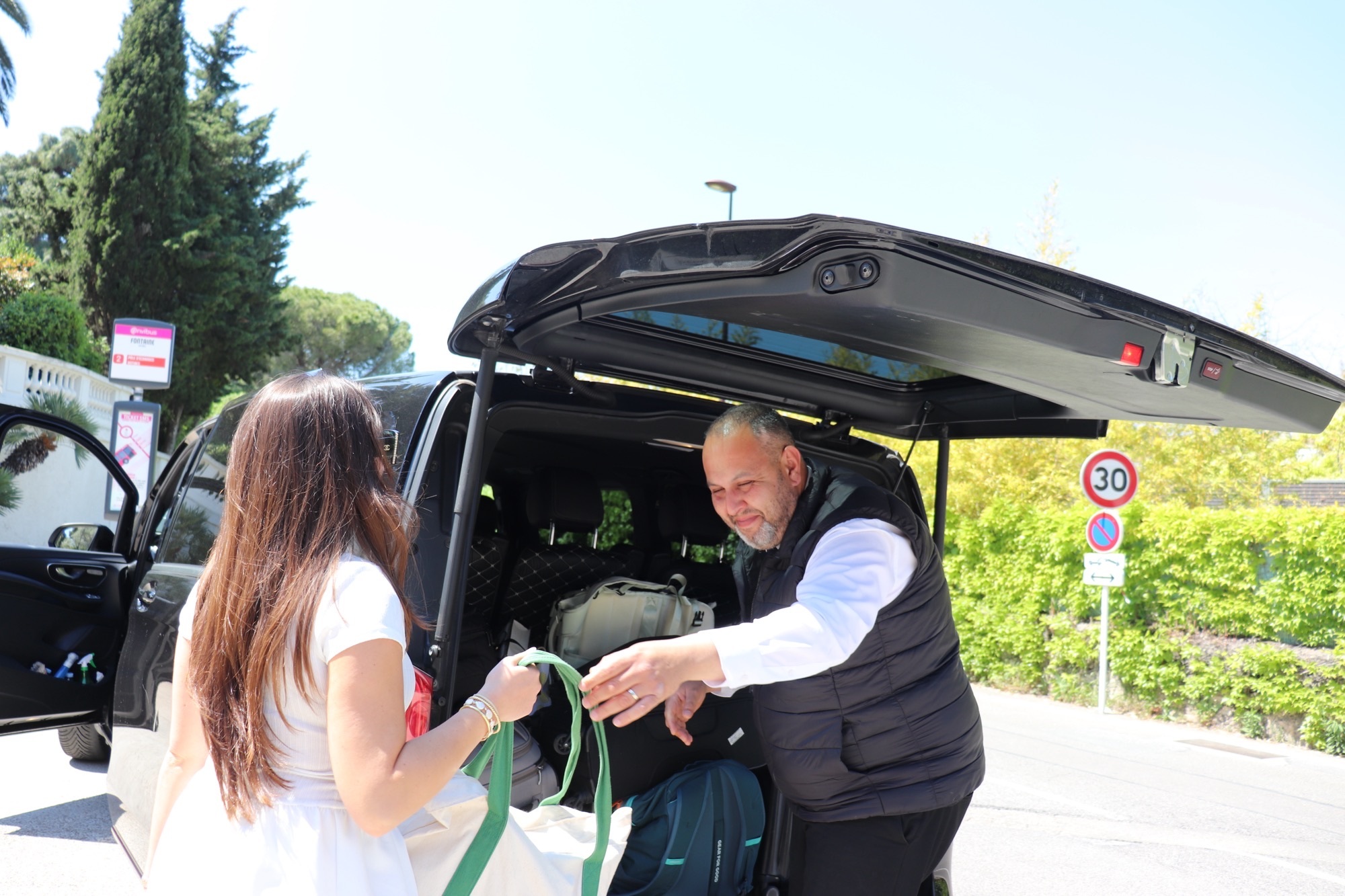
Drivers will prepare child seats in advance, help care for elderly passengers during rest stops, or watch over luggage while travelers explore a small town along the route.
This need isn’t unique to Central Europe.
It exists in families around the world.
From its beginnings in Prague, Daytrip gradually expanded across Europe, the Americas, and Asia—eventually reaching over 130+ countries. Increasing numbers of Chinese travelers are also using the service in Europe, Southeast Asia, and North America.
In the future, Daytrip wants to be recommended by AI
These days, no discussion about travel innovation is complete without mentioning AI.
Today, many travelers still plan trips by browsing platforms like Xiaohongshu or watching short videos. But in a few years, travelers may simply ask AI:
“Plan a relaxed five-day family trip in Northern Italy, ideally including a few lesser-known wineries.”
Turek finds this future exciting.
He believes services like Daytrip are naturally suited for the AI era, because AI excels at cross-platform integration and personalized recommendations.
“If AI knows you’re traveling with children, it might prioritize Daytrip drivers who provide child seats. If it knows you love history, it might design a route that includes three medieval castles.”
The company is currently investing in something it calls “geographic optimization.”
In simple terms, Daytrip is transforming detailed information about destinations, routes, and stopover points on its website into structured content that AI systems can easily read and interpret.

When travelers ask AI for travel advice, this increases the likelihood that Daytrip will appear as a recommended solution.
It’s similar to what marketers often call “planting seeds of recommendation”—except the audience is no longer human readers, but AI systems.
Interestingly, the company has already seen real examples of this in action.
One traveler in the United States was visiting Prague with two large dogs and wasn’t sure how to travel onward. He asked an AI assistant for help.
The AI replied:
“You might want to try Daytrip. They offer pet-friendly private transfers.”
And just like that, the journey began with an AI recommendation.
Daytrip’s story offers a simple insight about good businesses: they often begin with an extremely basic desire—to make life easier for people far from home.
The next time you travel in Europe—or anywhere else—and need to move between two cities, it might be worth trying a service like Daytrip.
You may discover that the journey between destinations can become one of the most memorable parts of the trip itself.