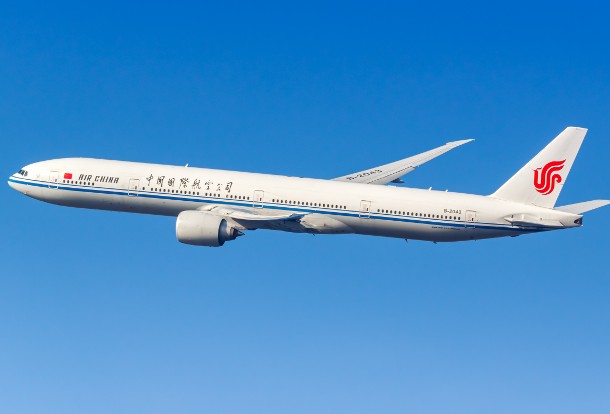
Air China recently announced that it will launch two nonstop routes from China to Brussels in late March next year, pushing a destination long dominated by Hainan Airlines into direct head-to-head competition.
An industry observer, Mr. L, remarked wryly that China’s aggressively expanding airlines are running out of places to fly—leaving Europe as one of the few directions left to scale.
Why Brussels? The simplest answer is that Brussels is a smaller airport with relatively flexible slot availability, giving airlines more room to enter and compete.
While Brussels may lack the bustle of Paris or Frankfurt, it offers three scarce advantages: a stable base of premium political and business travelers, belly-hold cargo that can generate early cash flow, and hub connectivity that extends reach across the broader European network. These factors help explain why both Hainan Airlines and Air China are doubling down.
On March 24, the Beijing–Brussels route will officially begin operations, followed two days later by the launch of the Chengdu–Brussels service. Chengdu will become the fifth mainland Chinese city—after Beijing, Shanghai, Shenzhen, and Chongqing—to offer nonstop flights to Brussels.
The impact is especially significant for southwestern China. Previously, travelers flying from Chengdu to Brussels had to transit through a third city, with total travel times ranging of 15 to 20 hours. The new nonstop service cuts flight time to around 11 hours, saving nearly eight hours.
The competitive picture is now clearer: Beijing goes head-on, Chengdu targets southwestern market, and Shanghai competes on frequency.
On the surface, airlines are competing for flights and passengers. At a deeper level, they are vying for three strategic assets: long-term cash flow from premium passengers, early revenue from belly-hold cargo, and a critical node that links China’s aviation hubs into Europe’s network.